
Duration connects a running load to the energy it consumes. A power figure alone leaves that duration unspecified, while a battery-capacity figure leaves the supported load unresolved. Matching commercial energy storage solutions to a project requires both quantities to describe the same operating task. Their relationship can be calculated, but the result retains the conditions of the load and the equipment that supplies it.
Giving Each Unit a Specific Question
A kilowatt measures the rate at which electrical energy is supplied or consumed. A kilowatt-hour measures an amount of energy accumulated over time. One kilowatt maintained for one hour corresponds to one kilowatt-hour, before any additional allowance for losses or supporting equipment is included.
An illustrative constant load of 20 kW operating for two hours consumes 40 kWh. Extending its operation to four hours doubles the energy requirement without changing its running power. Increasing the load instead changes the required supply rate, even if a shorter operating period leaves total energy consumption unchanged.
Real equipment rarely follows one perfectly flat demand line. Several operating periods can be assessed separately, with each period’s power multiplied by its duration and the energy amounts then added. The resulting total describes consumption across the schedule; the highest simultaneous demand remains a separate power requirement.
The required battery contribution can also differ from the building’s full demand. Where another available source supplies part of a load, the storage duty is the remaining contribution assigned to it. That allocation must be explicit before multiplying power by time; otherwise the calculation may size energy for a duty the battery never actually carries.
Starting events belong on that schedule with their own time scale. A brief event can challenge the supply’s temporary capability while contributing relatively little energy. The energy total cannot establish whether the converter can sustain the event’s current and duration.
Using a Duration Estimate Without Losing Its Assumptions
Dividing stored energy by a constant discharge power produces a duration estimate. The numerator and denominator must refer to compatible boundaries: nominal battery energy and delivered AC power do not automatically describe an entirely loss-free path. A transparent calculation identifies what has been included before its result becomes an operating expectation.
For commercial energy storage solutions, usable energy reflects the allowed charge range and any reserve withheld from the assessed duty. Conversion losses and auxiliary consumption further affect energy delivered to the load. Temperature and protection conditions can also restrict the intended operation, so nominal capacity is not synonymous with available output energy.
A changing demand requires a changing energy budget. Equipment that cycles off between operating periods consumes less energy than a constant maximum-load assumption would assign, although its starting events may remain relevant. A schedule-based estimate can capture both characteristics without treating an average load as the instantaneous maximum.
The remaining uncertainty concerns the operating case itself. An estimate based on reduced emergency activity answers a different question from one based on normal production. Naming the assessed schedule makes the calculation reproducible and exposes any later change in the required duty.
Reading Two Energy Options at One Output Rating
Output remains at 125 kW across the 225 kWh and 257 kWh versions of the GWTime cabinet family. The two nominal energy values therefore change the energy side of the comparison. A load exceeding the applicable continuous output does not become acceptable merely because the larger battery option is selected.
At a constant 125 kW, nominal division gives 1.8 hours for 225 kWh and approximately 2.06 hours for 257 kWh. These are arithmetic reference points before reserved charge, permitted discharge, conversion losses and operating restrictions are applied. Their purpose is to expose the power-energy relationship, rather than promise those operating periods at a particular site.
The family’s 137.5 kW maximum AC specification also requires its own interpretation. It cannot replace the shared 125 kW continuous figure in a calculation that assumes sustained output. A mathematical result remains tied to the rating category used in its denominator.
Checking the Requirement Across Different System Sizes
A power shortfall and an energy shortfall lead to different equipment questions. The GWESTS64-128kWh-400-A from GWTime pairs 64 kW AC output with 128 kWh nominal capacity. Its energy figure may appear sufficient for a modest schedule, while the concurrent load still has to fit the corresponding power capability.
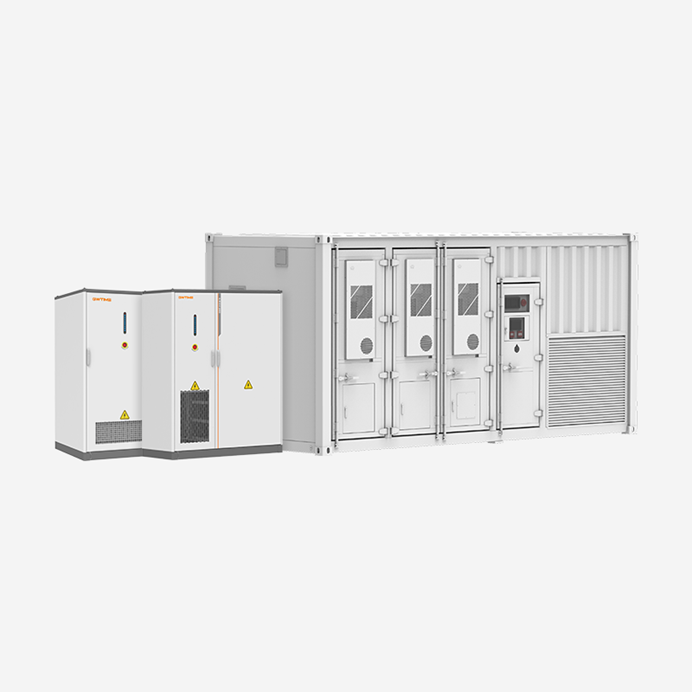
A 500 kW/1028 kWh GWTime container occupies a higher output class. Comparing it with a smaller cabinet requires recalculating the intended duty, rather than reading the energy increase as a proportional increase in operating hours. The supported power and the period over which it is required change the meaning of that larger reserve.
Requirements for commercial energy storage solutions become clearer when each shortfall is assigned to the relevant quantity. Insufficient sustained power concerns conversion capability; insufficient energy concerns the assigned operating period and usable reserve. A project can face either constraint or both, and the response depends on which part of the duty remains uncovered.
Once the operating schedule is fixed, the comparison can retain two explicit acceptance values. One states the concurrent demand that the supply must carry, and the other states the energy allocated to the intended period. Equipment assessment then proceeds with matched quantities, rather than allowing a large number in one unit to conceal a shortfall in the other.
